
At a Glance

At a Glance
Preview
Our premium pig grower feed meets the complete nutritional needs of growing pigs. Suitable for pigs weighing 20 to 60 kg, this feed has a balanced protein content of 14.1% for regular growth and a calcium ratio of 0.59% for bone development. Vitamins A, D3, and additional minerals are included to improve health and vitality.
Available for ad libitum feeding, it provides continuous nutrition for growing pigs.
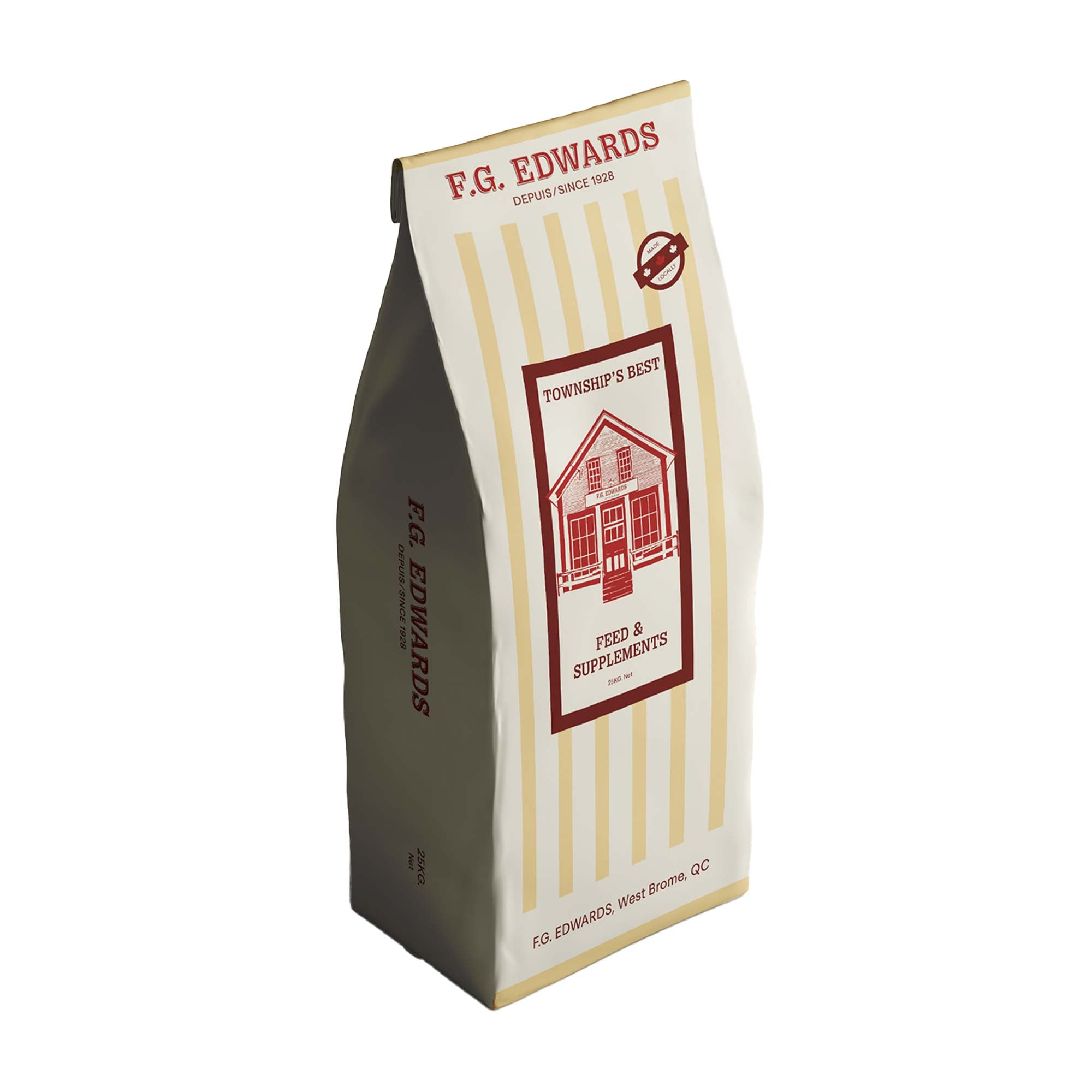
F.G. Edwards - Pig Grower 14%
- Regular price
- $23.95
- Sale price
- $23.95
- Regular price
-
- Unit price
- $0.96 per kg
F.G. Edwards - Pig Grower 14%
Skip, change, or cancel anytime.
Secure checkout • 30-day returns
Disponibilité en magasin
Les niveaux de stock peuvent changer rapidement. Appelez le magasin pour confirmer.
Frequently Asked Questions
What is pig grower feed and when should I switch to it
Pig grower feed is a complete diet formulated for the intermediate growth phase, typically when pigs weigh between 20 and 60 kg. It follows the starter feed used for newly weaned piglets and precedes the finisher diet used to bring pigs to market weight. The F.G. Edwards grower contains 14,1 % crude protein, which is lower than starter feed because growing pigs’ protein requirements decrease relative to their energy needs as they mature. Switch from starter to grower when pigs reach approximately 20 kg, which typically occurs around 8 to 10 weeks of age depending on breed and management. Transition gradually over 5 to 7 days by blending the two feeds in increasing proportions of grower to prevent digestive upset and maintain feed intake.
Why does this pig grower feed contain 14.1% protein instead of a higher level
The 14,1 % protein level is calibrated to match the actual amino acid requirements of pigs in the 20 to 60 kg growth phase. During this stage, approximately 75 % of the total feed a pig consumes in its lifetime is eaten, making nutritional accuracy critical for both performance and cost control. Feeding excess protein beyond what the pig can convert to lean muscle results in three problems: the surplus is excreted as nitrogen waste, increasing ammonia levels in the barn and creating environmental concerns; it raises feed costs unnecessarily since protein sources like soybean meal are expensive; and it can stress the kidneys. The 14,1 % level provides sufficient lysine and essential amino acids to support steady lean growth of approximately 700 to 900 g per day while directing dietary energy efficiently toward muscle rather than fat deposition.
How much grower feed does a pig eat per day between 20 and 60 kg
Feed intake increases progressively as pigs grow. At 20 kg, expect each pig to consume approximately 1,0 to 1,3 kg per day. By the time they reach 60 kg, daily intake typically rises to 2,0 to 2,5 kg per pig. Over the entire grower phase (roughly 6 to 8 weeks depending on genetics and management), a single pig will consume approximately 70 to 90 kg of grower feed in total. For a small batch of 10 pigs, plan on approximately 700 to 900 kg of feed for this phase. Always ensure clean, fresh water is available at all times—pigs drink 2 to 3 litres of water per kilogram of feed consumed. Monitor individual pen consumption to identify any animals that are eating significantly less, which could signal health issues or social stress from dominant pen mates.
What housing conditions do grower pigs need for best feed efficiency
Feed efficiency in grower pigs is strongly influenced by their environment. Maintain barn temperature between 18 and 22 °C for pigs in this weight range—temperatures below 15 °C force pigs to divert dietary energy toward body heat rather than growth, worsening feed conversion by as much as 2 to 3 % per degree below the comfort zone. In Quebec’s cold winters, insulation and ventilation management are especially important. Provide 0,5 to 0,7 m² of floor space per pig in the grower phase; overcrowding reduces feed intake and increases aggression. Keep feeders clean and adjusted so feed flows freely without excessive waste—a properly adjusted feeder should show about 40 to 50 % of the feeder pan covered with feed. Ensure at least one water nipple per 10 to 12 pigs with a flow rate of 1 to 1,5 litres per minute.
Why are my grower pigs not gaining weight as expected
Poor weight gain during the grower phase usually stems from one of several manageable factors. Inadequate feed intake is the most common cause—check that feeders are not bridged (feed stuck above the pan), that dominant pigs are not blocking access, and that water supply is adequate since pigs will not eat well without sufficient water. Health issues including respiratory disease, intestinal parasites, or subclinical infections reduce appetite and divert nutrients toward immune response rather than growth. Temperature stress is another factor: pigs below their comfort zone burn extra energy for warmth while pigs above 25 °C reduce feed intake voluntarily. Finally, verify that the correct feed is being used—feeding a lower-protein finisher prematurely can slow growth during this critical phase when protein demand is still relatively high.
How to store pig grower feed properly in Quebec weather conditions
Proper storage protects both feed quality and your investment. Keep bags in a dry, well-ventilated area off the ground on pallets or shelves to prevent moisture absorption from concrete floors—particularly important during Quebec’s humid summer months when condensation can form on cold surfaces. Store in an enclosed space to keep out rodents; mice and rats contaminate feed with droppings and urine, which can transmit disease to pigs. Once opened, use the feed within 3 to 4 weeks to maintain freshness and vitamin potency. In winter, avoid storing feed in unheated buildings where repeated freeze-thaw cycles can cause condensation inside bags. Check feed for musty odour, clumping, or visible mould before each feeding—if any of these are present, discard the affected portion rather than risking digestive problems in your pigs.
What is the difference between F.G. Edwards conventional and Bio Rard organic pig feed
F.G. Edwards offers two approaches for raising pigs:
- F.G. Edwards conventional program—includes a starter feed for weaned piglets and this grower at 14,1 % protein for pigs from 20 to 60 kg. These feeds are formulated at the F.G. Edwards mill in Saint-Césaire using conventional grain sources, optimized for growth efficiency and cost-effectiveness in small-scale pork production
- Bio Rard organic finisher—a certified Ecocert Canada feed made from locally sourced organic grains, designed for producers seeking organic certification for their pork. This feed commands a higher price per bag but allows producers to market their pork at a premium organic price
For most hobby farmers and small-scale pork producers in the Eastern Townships, the conventional F.G. Edwards program offers the best balance of performance and value. Producers targeting organic markets should plan their feed program from the start since organic certification requires organic feed throughout the animal’s life.
Where to buy pig feed and supplies in the Eastern Townships
F.G. Edwards produces its complete swine feed program locally and stocks it at both retail locations in West Brome and Bedford. The program includes the starter feed for newly weaned piglets and this grower for pigs from 20 to 60 kg. We also carry the Bio Rard organic pork finisher for certified organic producers, as well as the F.G. Edwards Mini-Pig feed for pet pig owners. Beyond feed, our stores stock livestock supplies including water nipples, feeders, bedding, fencing, and health products to support your pork operation from start to finish. Our staff includes experienced farmers who can help you calculate feed quantities based on the number of pigs you are raising and advise on management strategies specific to Quebec’s seasonal conditions.