

At a Glance
At a Glance
Aperçu
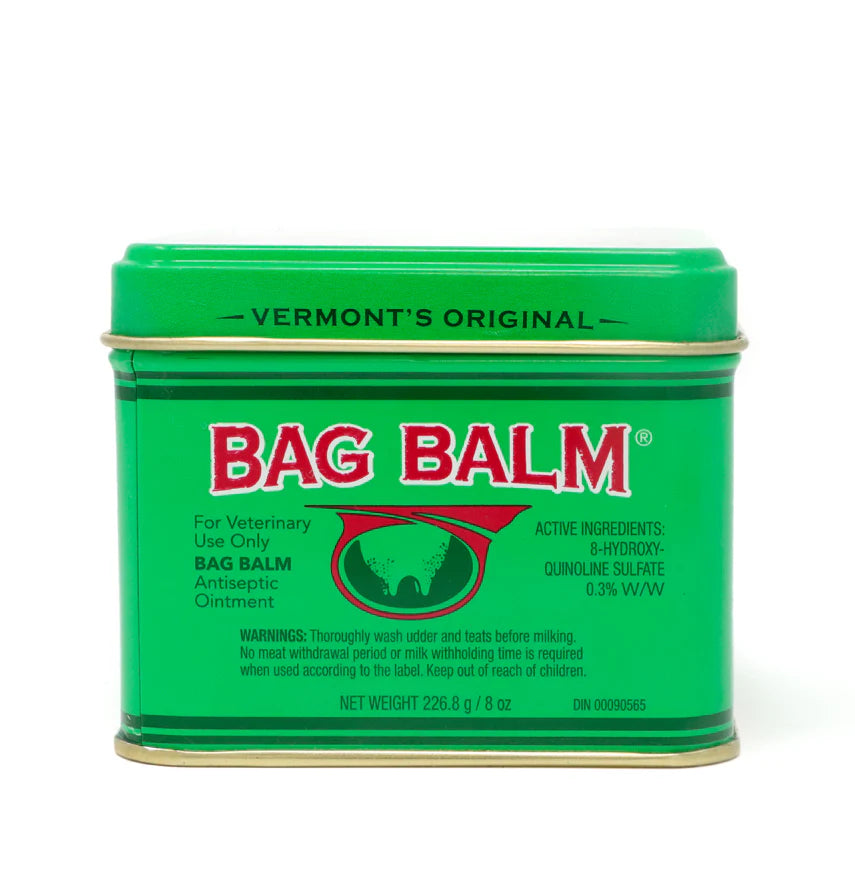
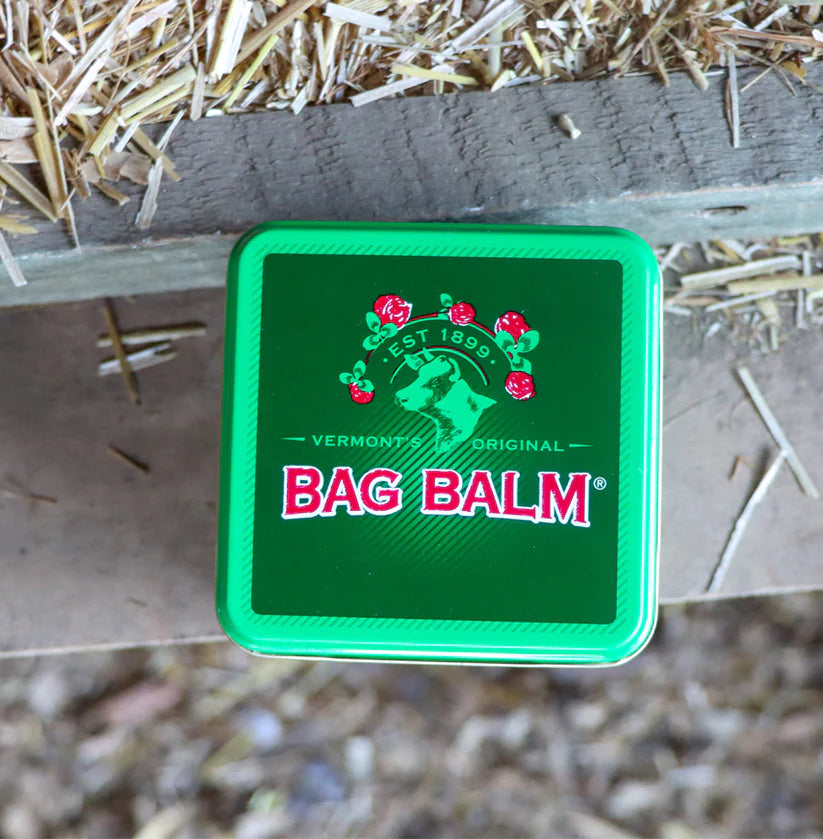
Bag Balm antiseptic ointment has been a staple in the agricultural world since 1899. Originally developed to soothe irritated udders of dairy cows after milking, this lanolin and petrolatum-based ointment has become a versatile product for both humans and animals. Its simple formula—just four ingredients, including 0.3% 8-hydroxyquinoline sulfate as a mild antiseptic—protects and moisturizes dry, chapped, or damaged skin, whether from cold weather or manual labor.
Main features
- A formula proven for over 125 years, unchanged since its inception
- A lanolin-rich base that retains moisture and deeply softens the skin
- Mild antiseptic (8-hydroxyquinoline sulfate 0.3%) that helps prevent superficial infections
- No added perfume, colorants, alcohol, parabens or phthalates
- Dual use: udder care for dairy cows and hydration of human skin (hands, heels, lips, elbows)
- Also suitable for horses (cracks, harness chafing) and pets (dry pads, hot spots)
Specifications
| Active ingredient | 8-Hydroxyquinoline Sulfate 0.3% |
| Base | Petrolatum USP, lanolin, paraffin wax |
| Without | Perfume, colorant, alcohol, parabens, phthalates |
| Use | Humans and animals (cattle, horses, dogs, cats) |
| Origin | Made in Vermont, USA |
| Brand | Bag Balm (Vermont's Original) |
Bag Balm Antiseptic Ointment
- Regular price
- $19.75
- Sale price
- $19.75
- Regular price
-
Bag Balm Antiseptic Ointment
Secure checkout • 30-day returns
Disponibilité en magasin
Les niveaux de stock peuvent changer rapidement. Appelez le magasin pour confirmer.
Frequently Asked Questions
What is Bag Balm and what is it used for
Bag Balm is a lanolin-based antiseptic ointment originally developed in 1899 in Vermont to soothe and protect dairy cows' udders after milking. Its formula contains just four ingredients: petrolatum, lanolin, paraffin wax, and 8-hydroxyquinoline sulfate at 0.3 % as a mild antiseptic. Over time, farmers discovered it worked just as well on their own dry, cracked hands, and today Bag Balm is widely used on humans and animals alike. Common applications include chapped hands, cracked heels, dry elbows, windburned skin, minor cuts, and abrasions. On the farm, it remains a staple for dairy operations, equine skin care, and soothing irritated paw pads on dogs and cats.
How do I apply Bag Balm for best results
For maximum effectiveness, apply Bag Balm to clean, slightly damp skin. Soak your hands or feet in warm water for at least 5 minutes, towel dry gently, then apply a generous layer of Bag Balm to the affected area. For overnight treatment of severely cracked hands or heels, cover with cotton gloves or socks to lock in moisture while you sleep. On dairy cows, apply a thin coating to udders and teats after each milking session, allowing the ointment to remain on the surface as a protective barrier. For horses, use it on pastern crevasses, girth rubs, or minor harness irritation after cleaning the area. A small amount goes a long way—start with a pea-sized portion and add more only if needed.
Is Bag Balm safe for humans and animals
Yes, Bag Balm is safe for external use on both humans and animals. Its formula has remained virtually unchanged since 1899 and contains no added fragrances, dyes, alcohol, parabens, or phthalates. The active antiseptic ingredient, 8-hydroxyquinoline sulfate at 0.3 %, has a long safety record for topical application. However, there are important precautions to follow:
- For external use only—avoid contact with eyes and mucous membranes
- Do not apply to deep wounds, puncture injuries, or severe burns—consult a veterinarian or physician for serious injuries
- Keep away from open flames and direct heat sources due to the petrolatum base
- Not recommended for nursing nipples—use plain lanolin or petrolatum instead
On animals, Bag Balm is routinely used on cattle, horses, dogs, cats, and other livestock without adverse effects when applied to intact or mildly irritated skin.
How to use Bag Balm on dairy cow udders
Bag Balm was specifically formulated for dairy cow udder care, and it remains one of the best products for this purpose. After each milking, clean the teats and udder skin with a sanitizing teat dip, then pat dry. Apply a thin, even coating of Bag Balm over the entire teat surface and any chapped areas of the udder. The petrolatum base creates a protective barrier against moisture loss and environmental irritants between milkings, while the lanolin softens and conditions the skin. The mild antiseptic helps prevent superficial bacterial growth on cracked skin. During Quebec's harsh winters, udder chapping is especially common when cows transition between the cold outdoor environment and the warm, humid barn. Consistent application after every milking session is key—sporadic use provides far less protection. For severely cracked teats, apply a thicker layer and consider using a barrier teat sealant between milkings as well.
Can I use Bag Balm on my dog or cat
Absolutely. Bag Balm is widely used by pet owners and veterinarians for several common skin issues in dogs and cats:
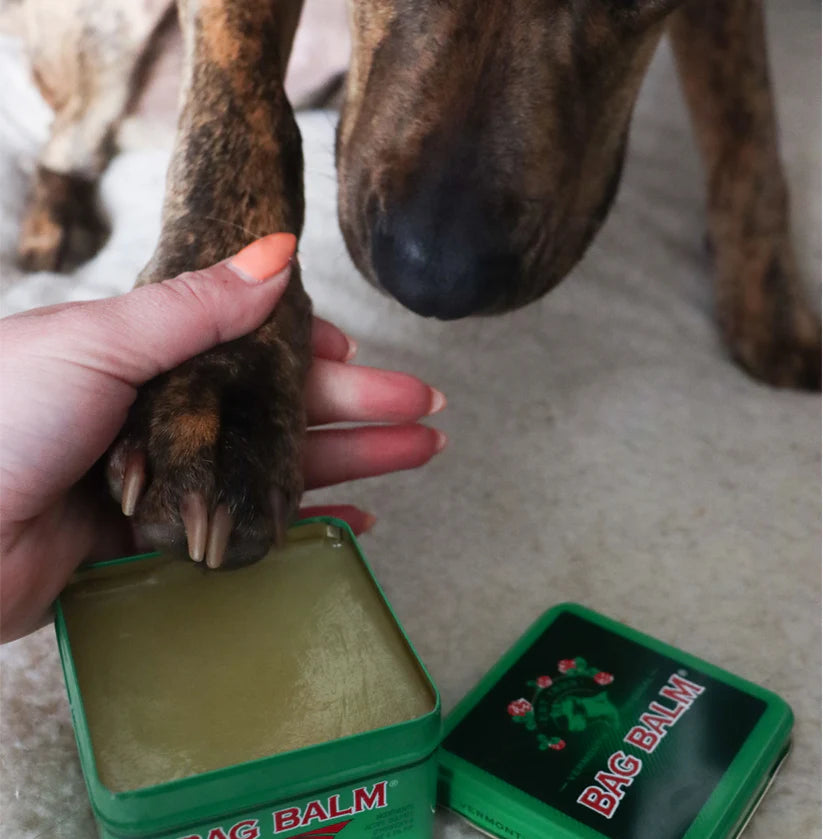
- Dry or cracked paw pads—especially common in winter when road salt and cold pavement cause irritation. Apply a thin layer and distract your pet for 10–15 minutes to allow absorption before they lick it off
- Hot spots—the ointment helps soothe the irritated area and its slightly bitter taste can discourage further licking
- Dry nose—a small dab on a dog's dry, cracked nose softens and protects the tissue
- Minor cuts and abrasions—the antiseptic component provides basic protection while the occlusive barrier promotes healing
While Bag Balm is not toxic if ingested in small amounts, it is meant for external use only. If your pet persistently licks the application site, consider using an Elizabethan collar or applying the ointment at bedtime when the pet is less active.
Does Bag Balm help cracked hands and dry skin in winter
Bag Balm is one of the most effective over-the-counter remedies for severely cracked hands, and its popularity among farmers, ranchers, and outdoor workers in cold climates is well earned. The petrolatum base forms a thick occlusive barrier that prevents transepidermal water loss—the primary cause of winter dryness. The lanolin component actively softens and conditions the skin, penetrating into surface crevices that lighter lotions cannot reach. For the best results during Quebec's long winters, apply Bag Balm to clean hands at bedtime and wear cotton gloves overnight. After 3–5 nights of consistent use, even deeply cracked fingertips typically show significant improvement. Bag Balm also works well on cracked heels, dry elbows, chapped lips, and any area where cold wind and low humidity strip moisture from the skin. Unlike many commercial hand creams that contain water and evaporate quickly, Bag Balm stays on the skin for hours, providing continuous protection.
What is the difference between Bag Balm and regular petroleum jelly
While both products use petrolatum as their base, Bag Balm offers three key advantages over plain petroleum jelly. First, Bag Balm contains lanolin, a natural wax produced by sheep's wool glands that closely mimics the lipids in human skin. Lanolin actively softens and conditions cracked skin rather than simply sitting on the surface. Second, Bag Balm includes a mild antiseptic (8-hydroxyquinoline sulfate at 0.3 %) that helps inhibit bacterial and fungal growth on broken skin—something plain petroleum jelly cannot do. Third, the addition of paraffin wax gives Bag Balm a thicker, more adhesive consistency that stays in place on working hands and animal skin better than the slippery texture of plain petroleum jelly. For severely cracked or chapped skin that is at risk of infection, Bag Balm provides meaningfully more therapeutic benefit than petroleum jelly alone. However, for simple moisture sealing on intact skin, plain petroleum jelly can serve adequately.
Where can I buy Bag Balm in Quebec and what sizes are available
F.G. Edwards carries Bag Balm at both store locations in West Brome and Bedford, in the Eastern Townships of Quebec. Bag Balm is available in several sizes to match different needs: the classic 8 oz (227 g) tin is the most popular size for home and barn use, the 1 oz (28 g) tin is convenient for purse or toolbox, and the 4.5 lb (2 kg) pail is the most economical option for dairy operations and high-volume farm use. Tube formats in 2 oz and 0.33 oz are also available for on-the-go application. As a trusted farm supply retailer serving the region since 1928, F.G. Edwards stocks Bag Balm year-round alongside a full range of animal health and skin care products. Visit us in store or browse our selection online to find the right size for your needs.