
At a Glance
At a Glance
Preview
The SymbioFibre LTDF mix is made for fields with variable drainage, with areas that dry out and others that remain wet. It combines species that tolerate both excess moisture and drought, for a stand that holds up everywhere in the field and silage that is balanced in energy and protein.
Main Features
- For soils with variable drainage
- Species that tolerate both excess moisture and drought
- Shockwave II alfalfa (branched root system, tolerates a high water table) and Dynasty
- Freedom red clover and Apis giant white clover: high in sugars, they hold up in wet areas where alfalfa recedes
- Baroptima and Rustler tall fescue, Tored orchard grass, and Sundown orchard grass: sustained yield cut after cut
- Spring Green festulolium for fast establishment
- Better-fermented silage thanks to the sugars from the clovers and grasses
Sowing and Management
- Sowing rate and percentages of each species: see the bag label.
- Depth: 6 to 12 mm in clay or loam soil, 12 to 18 mm in sandy soil. Germination drops off beyond 20 mm.
- Calibrate the seeder according to the actual weight of the seed and its germination rate.
- The percentages in a seed mix are by weight, not by seed count: small seeds (clover, timothy, ryegrass) produce many more plants in the field per kilogram than large seeds (bromegrass, fescue).
- Target pH of 6.5 to 7 for the best yields.
- Late summer sowing: a mix with alfalfa needs about 6 weeks of growth before the first killing frost, a mix with red clover about 4 weeks. The first average frost falls around October 18 in Saint-Rémi.
- Direct spring sowing gives 1 to 2 cuts in the year of sowing, or 50% to 65% of an established pasture.
- Avoid late summer sowing in heavy clay, which is difficult to prepare into a fine seedbed in August.
Specifications
| Type | Forage mix |
| Composition | Shockwave II alfalfa, Dynasty alfalfa, 2C Freedom red clover, Apis giant white clover, Baroptima tall fescue, Rustler tall fescue, Tored orchard grass, Sundown orchard grass, Spring Green festulolium |
| Range | Silage |
| Target Soils | Variable drainage |
| Key Species | Alfalfa, red clover, orchard grass, fescue |
| Format | 20 kg (44 lb) bag |
| Season | 2026-2027 |
| Brand | ProRich Seeds |
- Regular price
- $278.71
- Sale price
- $278.71
- Regular price
-
$302.95
SymbioFibre LTDF Silage Mix, 20 kg Bag - ProRich Seeds
or check out faster
How to get it
- Free pickup in Bedford or West Brome (QC), ready today (order before 3 p.m.)
- Free local delivery from $95, Tuesday to Thursday
- Shipping across Canada by carrier
Secure checkout1% back for members
Disponibilité en magasin
Les niveaux de stock peuvent changer rapidement.
Goes with it


Early 2027 OrderPickup, delivery and shipping from mid-AprilComment ça marche
Early 2027 Order
Reserve your seed for the spring
Book and pay now: we’ll order your bags for you, and they’ll be ready for you by mid-April.
Pickup, delivery and shipping from mid-April
- Book and pay onlineThe calculator tells you how many bags you need.
- We order your bagsYour seed is reserved in your name.
- Pickup, delivery or shippingFrom mid-April: in Bedford, in West Brome, for local delivery or carrier delivery anywhere in Quebec. We’ll message you when it’s ready.
Final sale: for biosecurity reasons, seeds may not be returned.
Mélange fourragerSaison 2026-2027
Fiche de semis
Taux de semis
Sur l'étiquette du sac
Le taux et les proportions de ce mélange sont imprimés sur chaque sac.
Pour
- Ensilage
Sols
Sols au drainage variable: tolère à la fois l'excès d'humidité et la sécheresse.
9 variétés dans le sacProportions sur l'étiquette du sac
Légumineuses 4
- Luzerne Shockwave II
- Luzerne Dynasty
- Trèfle rouge 2C Freedom
- Trèfle blanc géant Apis
Graminées 5
- Fétuque élevée Baroptima
- Fétuque élevée Rustler
- Fétuque des prés Tored
- Dactyle Sundown
- Festulolium Spring Green
ProRich Blends
What mix for your field?
Pour quoi faire ?
Votre champ
11 mélanges
-
SymbioFibre LTDF Pro+Silage
No more alfalfa for drying soils
SilageSolDryingLégumineusesAlfalfa (plus) and cloverBientôt en ligne -
SymbioFibre LTDFSilage
Holds up in both dry and wet areas of the field
SilageSolVariable drainageLégumineusesAlfalfa and cloverBientôt en ligne -
SymbioFibre TDFSilage
Without lucerne, for soils that remain wet
SilageSolStays wetLégumineusesClovers, without alfalfaBientôt en ligne -
SymbioFibre DFSilage
Grass only, to be combined with your legume
Silage HaySolDry or wetLégumineusesNoneBientôt en ligne -
SymbioControlSilage
Mostly grasses: ryegrass, brome, fescues
Silage HaySolWell drainedLégumineusesA little white cloverBientôt en ligne -
SymbioPature LDFPasture
10 species, dense undergrowth to prevent trampling
GrazingSolWell drainedLégumineusesAlfalfa and three cloversBientôt en ligne -
SymbioPature TDFPasture
10 species, focused on red clover, chicory and fescue
GrazingSolMore humidLégumineusesThree clovers and a piece of alfalfaBientôt en ligne -
TopGreen CavaliaCommercial hay
Fléole and brome: clean hay that sells
Hay HorsesSolWell drainedLégumineusesNoneBientôt en ligne -
PleinVert PaddockHorses
Grasses that tolerate trampling, without quackgrass
Grazing HorsesSolPaddocks and pasturesLégumineusesA little white cloverBientôt en ligne -
PleinVert AEconomy
The lowest cost in the range
Hay SilageSolWell drainedLégumineusesAlfalfa and ordinary cloverBientôt en ligne -
PleinVert BEconomy
Alfalfa-free hay
Contains alsike clover: not for horses
Hay Silage PastureSolDamp or acidicLégumineusesClovers, including red cloverBientôt en ligne
Aucun mélange de la liste ne vise ce champ. Essayez « Tout » pour le sol, ou voyez nos semences d'une seule espèce.
Frequently Asked Questions
Quel taux de semis utiliser ?
Le taux recommandé et le pourcentage de chaque espèce sont indiqués sur l'étiquette du sac. Calibrez le semoir selon le poids réel de la semence.
Que veulent dire les lettres L, T, D, F ?
Ce sont les espèces clés de la gamme SymbioFibre: L pour luzerne, T pour trèfle rouge, D pour dactyle, F pour fétuque.
Faut-il inoculer un mélange avec légumineuses ?
Si le champ n'a pas porté la légumineuse depuis longtemps, oui: chaque légumineuse a sa bactérie (luzerne, trèfle, lotier). Utilisez un inoculant qui couvre les légumineuses du mélange.
LTDF ou TDF ?
Le LTDF contient de la luzerne, pour les champs au drainage variable. Le TDF n'en contient pas: il est fait pour les sols qui restent mouillés, où la luzerne ne survit pas.
Let customers speak for us
Service rapide et coût raisonnable.
Timely delivery and good product.

Tout pour le poulailler et le jardin! J’aime beaucoup la sélection de produits
Très bonne qualité de produit, plus qu’heureuse de mon achat!

Great product and super helpful staff.

Ma belle olive ! Magnifique coco kaki

Magnifique poulette un peu tetue maisnen bonne sante et fait de magnifique coco beige

Super gentille et productive.

Super gentille et productive.

Super gentille et productive.
Mes poules adorent

Jai tout aimé. L’organisation etait parfaite et efficace

Good feed !
Very satisfied, great hens
Perfect beautiful Hens , very satisfied

Two stores, one team
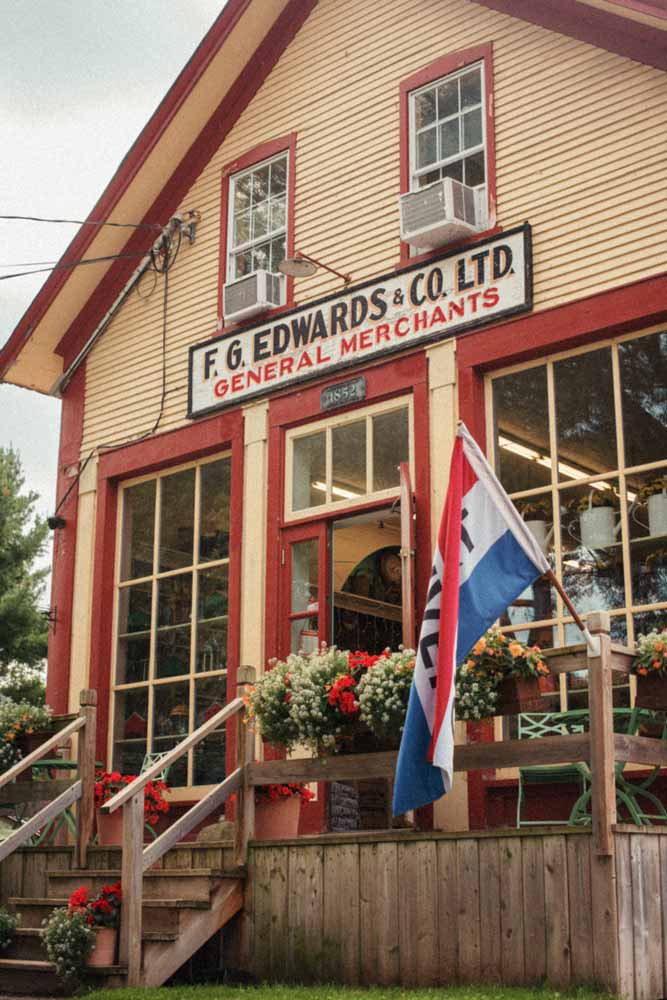
In Bedford as in West Brome, you will find people who know animals, fields, and the seasons.
-
Exceptional service! You rarely find that in stores today.
Marie-Josée, Knowlton -
Don’t mess around. FG Edwards is THE place.
Louis-Alexandre Parent, Sutton