

At a Glance
At a Glance
Overview
Oyster scales for poultry - Coastal Brand
Oyster Shells - FG Edwards is a natural feed supplement designed to support the health of livestock and poultry. These finely ground oyster shells are an excellent source of calcium, an essential element for bone development and the production of quality eggshells.
Key features and benefits:
- Rich in calcium: Essential for the development and maintenance of strong bone structures in livestock and for robust eggshells in poultry.
- General health support: Helps prevent diseases related to calcium deficiency and promotes healthy growth.
- Improved digestion: May help regulate stomach acidity and improve overall digestion.
- Versatility of use: Suitable for a wide range of animals, including laying hens, pigeons, and livestock.
- Natural and sustainable source: Harvested in an environmentally friendly way, offering a sustainable alternative to traditional mineral supplements.
Instructions for use:
Incorporate oyster shells into the daily diet, adjusting the quantity according to the specific needs of the animals. They can be mixed directly into the food or offered separately.
Quality assurance:
FG Edwards Oyster Scales are produced to the highest quality standards, ensuring a pure and effective supplement for your livestock and poultry.
Oyster Shells - FG Edwards is a natural solution for improving the health and robustness of your livestock and poultry. Trust the quality and expertise of FG Edwards for an exceptional nutritional supplement.
- Regular price
- $9.35
- Sale price
- $9.35
- Regular price
-
Skip, change, or cancel anytime.
or check out faster
How to get it
- Free pickup in Bedford or West Brome (QC), ready today (order before 3 p.m.)
- Free local delivery from $95, Tuesday to Thursday
- Shipping across Canada by carrier
Secure checkout1% back for members
Disponibilité en magasin
Les niveaux de stock peuvent changer rapidement.
Goes with it
In the same family
All 23 in Poultry-
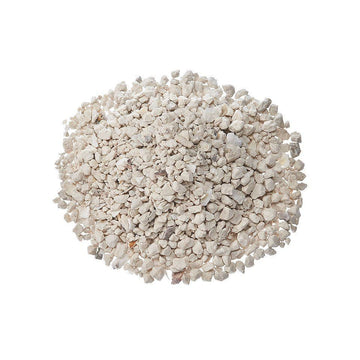 You are hereOyster Shell
$9.35
2 options
You are hereOyster Shell
$9.35
2 options
-
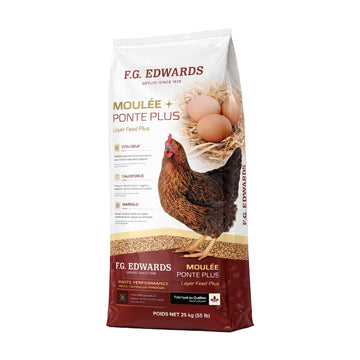 Layer Feed 16% - FG Edwards
$24.95
$1.00/kg
Layer Feed 16% - FG Edwards
$24.95
$1.00/kg
-
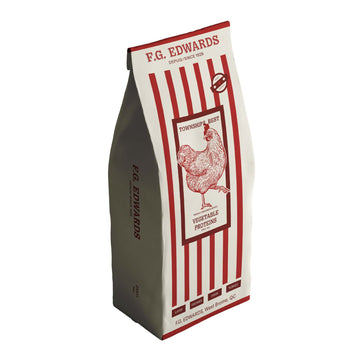 F.G. Edwards - Chick Grower 16%
$24.35
$0.97/kg
F.G. Edwards - Chick Grower 16%
$24.35
$0.97/kg
-
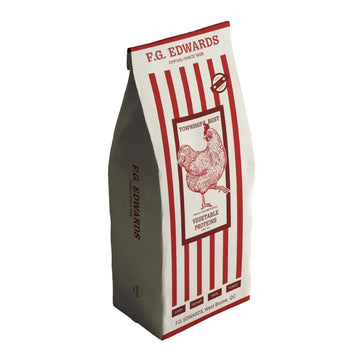 Broiler Chick Starter Feed 18% Protein | 0-28 Days - F.G. Edwards
$6.70
2 options
Broiler Chick Starter Feed 18% Protein | 0-28 Days - F.G. Edwards
$6.70
2 options
-
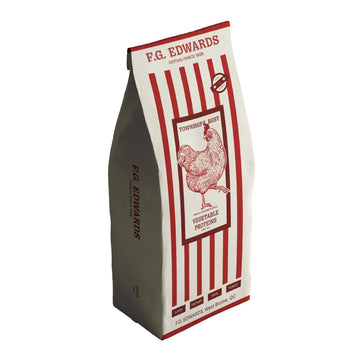 FG Edwards - Duck Grower Feed 15%
$24.95
$1.00/kg
FG Edwards - Duck Grower Feed 15%
$24.95
$1.00/kg
-
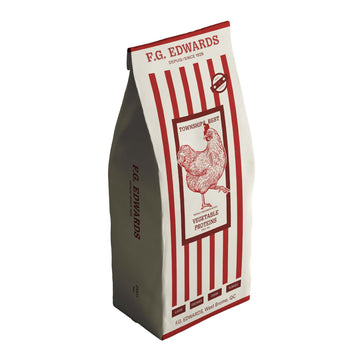 FG Edwards - Turkey Grower Feed 19%
$25.95
$1.04/kg
FG Edwards - Turkey Grower Feed 19%
$25.95
$1.04/kg
-
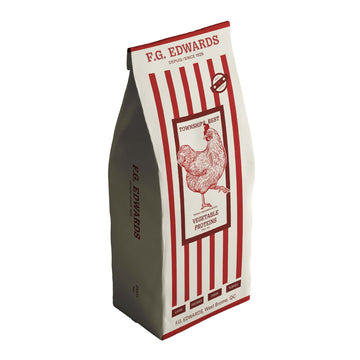 F.G. Edwards - Quail Layer Feed
$28.95
$1.16/kg
F.G. Edwards - Quail Layer Feed
$28.95
$1.16/kg
-
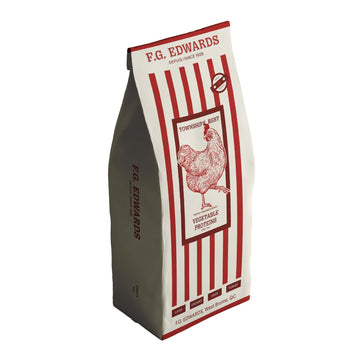 Early turkey feed - FG Edwards
$25.75
$1.03/kg
Early turkey feed - FG Edwards
$25.75
$1.03/kg
-
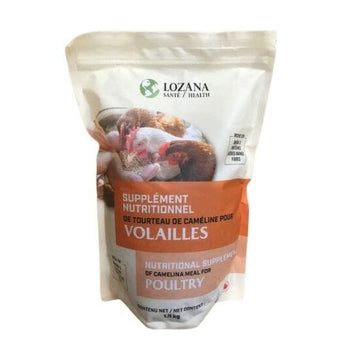 Lozana Health - Camelina Meal Nutritional Supplement for Poultry
$22.95
Lozana Health - Camelina Meal Nutritional Supplement for Poultry
$22.95
Frequently Asked Questions
What is oyster shell for poultry and why do hens need it?
Oyster shell is a natural calcium supplement made from finely crushed oyster shells, offered to laying hens as a free-choice dietary addition. Hens need it because producing an eggshell requires approximately 4 grams of calcium every day — and even a well-formulated layer feed at 16 % protein typically provides only about 60 to 70 % of that requirement.
The remaining calcium must come from a supplemental source. Without it, hens pull calcium from their own bones to form eggshells, leading to weakened skeletal structure, soft-shelled eggs, and reduced production over time. This depletion is cumulative and accelerates as hens age.
Oyster shell is preferred over other calcium sources because of its particle size and slow dissolution rate. The coarse, flaked texture means it stays in the gizzard longer than fine calcium powders, releasing calcium gradually throughout the day — including overnight when most eggshell formation occurs. This sustained release matches the hen's biological needs far better than a single burst of calcium from her feed.
How do I feed oyster shell to my laying hens?
Always offer oyster shell free-choice in a separate container — never mixed directly into the feed. Hens have a remarkable ability to self-regulate their calcium intake and will eat exactly what they need when given the choice. Mixing it into feed forces all birds to consume the same amount regardless of individual need.
Practical feeding setup:
- Place a small dish, cup, or dedicated hopper containing Coastal Brand oyster shell where hens can access it throughout the day
- Position it near the feeder and waterer so hens encounter it during their normal feeding routine
- Refill when the container is empty — most hens consume approximately 2 to 4 grams per day, so a small dish lasts longer than you might expect
- Keep the container clean and dry — oyster shell does not spoil, but wet or soiled shell may be ignored
Do not offer oyster shell to chicks or pullets under 18 weeks of age. Young birds cannot process the high calcium content, and excess calcium can damage developing kidneys. Begin offering oyster shell only when your pullets reach point-of-lay age.
How much oyster shell does a laying hen eat per day?
A laying hen typically consumes 2 to 4 grams of oyster shell per day when offered free-choice, though this varies based on the individual hen's production rate, the calcium content of her base feed, and seasonal factors. High-producing hens laying 5 to 6 eggs per week will naturally eat more than hens laying 3 to 4.
At this consumption rate, oyster shell is an extremely economical supplement. A flock of 6 hens will go through roughly 100 to 150 grams per week — meaning a single bag lasts for months even with a small backyard flock.
You do not need to measure or ration oyster shell. The beauty of free-choice feeding is that hens regulate their own intake based on physiological need. A hen whose body is demanding calcium for eggshell formation will seek out and consume more; a hen that is molting or not actively laying will largely ignore it. Trust the bird — overconsuming calcium from oyster shell is virtually unheard of when it is offered separately from feed.
What is the difference between oyster shell and limestone grit for poultry?
These two products are often confused but serve different purposes and should not be substituted for one another. Oyster shell is a calcium supplement that dissolves in the digestive system to provide calcium for eggshell formation. Limestone grit (also called insoluble grit or granite grit) stays in the gizzard to mechanically grind feed.
Key differences:
- Oyster shell: soluble calcium source, dissolves slowly in the gizzard and proventriculus, absorbed into the bloodstream for eggshell production — needed by laying hens only
- Granite grit: insoluble, stays permanently in the gizzard as grinding stones to break down whole grains, seeds, and fibrous material — needed by all poultry eating anything other than milled feed
Many backyard flock owners need both products. Hens eating commercial pellet feed do not require granite grit since it is already ground. However, if your hens eat scratch grain, scraps, or forage outdoors, they need grit to digest those foods. Offer both oyster shell and grit in separate free-choice containers.
Why are my hens eating more oyster shell than usual?
An increase in oyster shell consumption usually signals that your hens' calcium demand has risen and their bodies are responding appropriately. This is the free-choice system working as intended — the hens are self-correcting a calcium gap.
Common reasons for increased consumption:
- Peak production: hens laying at their highest rate (daily or near-daily) need maximum calcium and will seek out more
- Feed change: if you recently switched to a feed with lower calcium content, hens compensate by eating more oyster shell
- Spring laying surge: after Quebec's shorter winter days, lengthening daylight in March and April triggers a production spike that increases calcium demand
- Aging flock: hens over 2 years old absorb dietary calcium less efficiently and may need more
Increased oyster shell consumption is rarely a concern on its own. However, if you notice increased consumption combined with soft-shelled eggs, it may indicate a vitamin D3 deficiency — D3 is essential for calcium absorption. Ensure your layer feed includes adequate D3, especially during winter.
Can I give oyster shell to roosters and non-laying hens?
Roosters and non-laying hens do not need supplemental calcium and should not be force-fed oyster shell. However, if oyster shell is offered free-choice in a mixed flock — which is the standard approach — the occasional peck by a rooster or a non-laying hen is not harmful.
The reason this works safely is that free-choice feeding relies on self-regulation. Birds without a calcium deficit simply do not seek out and consume significant amounts of oyster shell. Roosters and non-laying pullets will overwhelmingly ignore the supplement. Studies have consistently shown that non-laying birds offered free-choice calcium consume negligible amounts.
The only situation requiring caution is with chicks and young pullets under 18 weeks. If you are brooding chicks in the same space as laying hens, place the oyster shell container in a location accessible only to the adult hens — elevated or behind a barrier that chicks cannot reach. Excess calcium in young, growing birds can cause kidney damage and interfere with proper bone development.
How should I store oyster shell and does it expire?
Oyster shell is one of the easiest poultry supplements to store. It is a mineral product that does not spoil, expire, or lose potency over time — unlike feed or vitamins that degrade with age. A bag stored properly will remain effective indefinitely.
Storage is straightforward:
- Keep the bag in a dry location off the ground — a shelf in the feed room or barn is ideal
- Seal the bag after each use or transfer to a container with a lid to prevent moisture absorption
- Avoid storing in areas where the bag can get wet — while the shell itself is unaffected by water, damp oyster shell clumps together and becomes difficult to dispense
In Quebec's humid summer months, condensation in unventilated storage spaces can dampen the product. If clumping occurs, simply spread the oyster shell on a dry surface and let it air out — it will return to its normal loose texture. In winter, oyster shell is unaffected by freezing temperatures, making it one of the few poultry supplements that requires virtually no seasonal storage adjustments.
When should I start offering oyster shell to my pullets?
Begin offering oyster shell when your pullets reach approximately 18 weeks of age, or about 2 weeks before you expect their first eggs. Most heritage and hybrid breeds start laying between 18 and 22 weeks depending on the breed, season, and day length.
Starting early — around 18 weeks — gives the pullets time to begin building calcium reserves before the physical demands of egg production begin. Their bodies need to build calcium reserves in their medullary bone, a specialized tissue that acts as a calcium reservoir used during overnight eggshell formation.
Signs your pullets are approaching point-of-lay and ready for oyster shell:
- Combs and wattles turning bright red and enlarging noticeably
- Squatting behaviour when you approach or reach toward them
- Increased interest in exploring nesting boxes
- Louder and more frequent vocalizations
Before 18 weeks, chick starter and grower feeds are formulated with appropriate calcium levels for growth. Adding oyster shell too early risks kidney damage in young birds not equipped to excrete excess calcium.


Let customers speak for us
Service rapide et coût raisonnable.
Timely delivery and good product.

Tout pour le poulailler et le jardin! J’aime beaucoup la sélection de produits
Très bonne qualité de produit, plus qu’heureuse de mon achat!

Great product and super helpful staff.

Ma belle olive ! Magnifique coco kaki

Magnifique poulette un peu tetue maisnen bonne sante et fait de magnifique coco beige

Super gentille et productive.

Super gentille et productive.

Super gentille et productive.
Mes poules adorent

Jai tout aimé. L’organisation etait parfaite et efficace

Good feed !
Very satisfied, great hens
Perfect beautiful Hens , very satisfied

Two stores, one team
In Bedford as in West Brome, you will find people who know animals, fields, and the seasons.
-
Exceptional service! You rarely find that in stores today.
Marie-Josée, Knowlton -
Don't try to mess around here. FG Edwards is THE place.
Louis-Alexandre Parent, Sutton