
Are your hens laying fewer eggs than usual? Are the shells thin or soft? Before looking for a health problem, first check what's in their feed. Nutrition is the number one factor influencing egg production—far more so than light, temperature, or breed. At FG Edwards, we've been formulating and manufacturing feeds for producers in the Eastern Townships since 1928. Here's everything you need to know to feed your laying hens properly, summer and winter.
The nutritional needs of a laying hen

An actively producing hen needs a precise diet to support the daily formation of an egg — a considerable metabolic effort that requires protein, calcium, energy, and vitamins in specific amounts.
Protein: 16%. This is the standard threshold for backyard laying hens. Protein provides the essential amino acids—particularly lysine and methionine—necessary for albumen (egg white) formation and feather renewal. A feed with 16% crude protein, such as our 16% laying hen feed , is formulated to meet this requirement as the sole source of nutrition.
Calcium: 3.5 to 4%. Each eggshell contains approximately 2 grams of calcium carbonate. Your hen needs to obtain this amount from her diet daily. High-quality laying hen feed already contains a high level of calcium, but most experienced breeders also offer oyster shells free-choice. Hens that need them will help themselves—it's remarkably precise.
Energy: approximately 2,700 to 2,800 kcal/kg. Metabolizable energy must be moderate. Too little, and the hen will slow down egg production to conserve reserves. Too much, and she will gain unnecessary weight, which also reduces production. It's a delicate balance that our nutritionists adjust in the feed formulation.
Vitamins A, D3, and E. Vitamin D3 is critical for calcium absorption—without it, even a calcium-rich feed won't produce good eggshells. Vitamin A supports the reproductive system, and vitamin E strengthens the immune system. All are included in a complete laying hen feed.
How much feed per day?

As a general rule, a laying hen consumes between 125 and 150 g of feed per day . This is the basis for calculating your needs.
For a small flock of backyard chickens, the simplest method remains free-choice feeding: keeping fresh feed available at all times in a suitable feeder . Chickens naturally regulate their consumption according to their energy needs. This is especially important in winter, when Quebec temperatures drop below -20°C and the chickens have to expend more energy simply to maintain their body temperature.
However, be aware that free-choice feeding only works well if pellets form the basis of their diet. If your hens have unlimited access to treats, mixed grains, and table scraps, they may neglect their pellets and develop deficiencies. The golden rule: treats and grains should never exceed 10% of their total diet .
For a flock of 6 hens, plan on using approximately 5 to 6 kg of feed per week. A 25 kg bag lasts about a month, making it a very economical purchase.

Types of laying hen feed explained
Not all laying hen feeds are the same. At FG Edwards, we manufacture our feeds locally and offer different formulations to meet the specific needs of each farmer.
Conventional 16% laying hen feed. This is the basic, complete, and balanced formula with vegetable proteins. Our 16% laying hen feed excludes animal meal and incorporates synthesized amino acids for optimal egg production. It is the choice of the majority of backyard poultry farmers in Quebec.
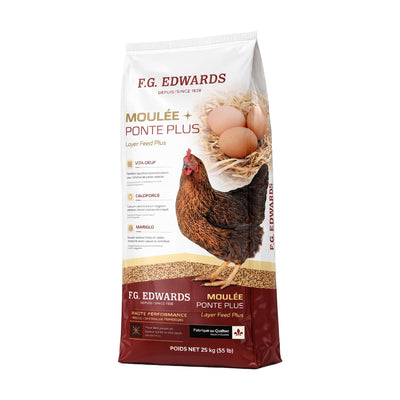
Laying Plus Feed — our most enriched formula. For farmers who want to go the extra mile, our Laying Plus takes nutrition to the next level. This formula incorporates natural aromatic plant extracts — phytogenic compounds derived from oregano, cinnamon, and chili pepper — whose effects on poultry digestive health are supported by university trials. Studies conducted on laying hens have shown that these extracts significantly improve feed efficiency (up to a 5% reduction in feed conversion ratio), increase average egg weight by more than 2%, and reduce the proportion of dirty eggs by nearly half. By supporting intestinal lining integrity and reducing oxidative stress, these compounds help your hens get the most out of every gram of feed consumed.
Ponte Plus also contains natural plant-based pigments—extracts of marigold flowers and red chili pepper—that naturally enhance the color of egg yolks, without artificial coloring. The result: deep, vibrant orange yolks, a sign of superior feed quality. These same pigments possess antioxidant properties that contribute to the overall health of the flock.
Add to that probiotics to support gut flora, a highly absorbable source of calcium for strong shells, and a complete formulation of natural antioxidants — and you have the most complete laying hen feed available in our region. All this at the same price as our conventional formula.
Organic laying hen feed. For breeders seeking organic certification or who simply prefer ingredients certified free of GMOs and pesticides, Bio-Rard organic laying hen feed is formulated with organic grains from Quebec producers. Its protein level is slightly higher (17%), which can promote egg production in heritage breeds.
Granulated, cubed or textured: which format to choose?
This is the most frequent question we receive at the counter, and the answer depends on your situation.
Cubed (pellet). The nutrients are compressed into small, uniform cylinders. Each cube contains the same nutritional composition, eliminating the need for sorting. This format generates the least waste—approximately 5 to 10% compared to 30 to 40% for textured feed. Cubed feed is ideal for confined herds that feed from troughs, and for producers who want to maximize every dollar invested.

Granulated (crumbled/crumbled). This is essentially the same cube, but crushed into smaller pieces. Granulated feed makes it easier for bantam (dwarf) hens, pullets recently switched to laying hen feed, and hens that tend to refuse large pellets. Waste is slightly higher than with cubes, but much lower than with textured feed.
Textured (mash). This is the traditional mix where you can see the different ingredients—cracked grains, soy flour, visible calcium carbonate. Some hens love to peck at the individual components, but that's precisely the problem: they pick and choose. They eat the corn first, then the wheat, and leave the protein supplement at the bottom of the feeder. The result: an unbalanced diet despite a correct formulation.
Our recommendation for most poultry farmers: pellets or mini-cubes , especially if you use a hopper feeder. If your hens tend to pick and choose, switching from textured to pelleted feed can transform your production in just a few weeks.
The feeding calendar: from chick to laying hen

Your poultry's diet should evolve with them. Here are the three key steps:
Starter (0 to 6 weeks): 18 to 20% protein. Chicks need a high protein content to support their rapid growth. This is the role of 18% starter chicken feed . The pellet size is fine (crumbs) so that chicks can eat easily from their first days. It is essential never to give laying hen feed to a chick—the high calcium content can damage their developing kidneys.
Growth (6 to 18 weeks): 14 to 16% protein. Growing pullets don't yet need the high calcium in laying feed, but they still require a good protein level to develop their frame and reproductive system. 16% growth feed is designed for this intermediate stage.
Laying (18 weeks and older): 16% protein + high calcium. The transition to laying feed should take place around 18 to 19 weeks , ideally before the first laying. Signs that your pullets are ready: their combs redden and grow larger, they begin to squat when you approach them, and they inspect the nesting boxes. The transition should be gradual over 7 to 10 days, progressively mixing the laying feed with the grower feed to avoid digestive upsets.
What distinguishes a superior quality laying hen feed
Not all 16% protein feeds are created equal. Beyond the basic values—protein, calcium, energy—it's the functional ingredients that make the difference between a decent feed and one that truly maximizes the potential of your laying hens.
Aromatic plant extracts for digestive health. Natural compounds derived from oregano, cinnamon, and chili pepper stimulate the secretion of digestive enzymes, strengthen the intestinal lining, and possess powerful antioxidant properties. Clinical studies conducted under controlled conditions have measured an improvement in feed efficiency of nearly 5%, an increase in egg weight of over 2%, and a significant reduction in dirty eggs—a sign of better gut health. This is the same class of phytogenic compounds that, in broiler chickens subjected to heat stress, improved weight gain by over 38% compared to an untreated control group. Simply put, these extracts help hens better absorb nutrients from their feed, resulting directly in larger, cleaner eggs and more consistent egg production.
Natural pigments for rich yolks. The color of the egg yolk is directly linked to the hen's diet. Pigments naturally extracted from flowers (marigold, also known as French marigold) and red chili peppers deposit carotenoids—primarily lutein and zeaxanthin—into the yolk, producing the deep orange that consumers associate with a quality free-range egg. These same carotenoids are powerful antioxidants, beneficial to both the hen and the nutritional value of the egg.
Probiotics and antioxidants. A balanced gut flora promotes nutrient absorption, strengthens the immune system and reduces digestive disorders — a particularly valuable advantage during periods of stress, whether due to intense cold, seasonal changes or transport.
Our Laying Plus combines all these functional ingredients in a single formulation. This makes it the most complete laying hen feed we have ever produced — and probably the most enriched available in the Eastern Townships.
Food in winter in Quebec: a particular challenge

No guide to chicken feeding would be complete without addressing the realities of a Quebec winter. At -25°C or -30°C, your chickens face challenges that farmers in more temperate regions never have to consider.
Energy requirements increase. In very cold weather, a hen will consume up to 20% more feed simply to maintain her body temperature at 41°C (106°F). Make sure the feeder remains well-stocked, especially in the morning—hens lose a lot of energy during the night. Some farmers add a handful of whole grains (corn, wheat) at the end of the day: digesting the grains produces internal heat that helps the hens get through the night. This is one of the few instances where scraped grains offer a real nutritional benefit.
It is also in winter that the phytogenic compounds in enriched feed become truly beneficial. The stress caused by extreme cold affects the intestinal lining in the same way as summer heat stress—by reducing nutrient absorption and increasing oxidative stress. Natural extracts of aromatic plants that support intestinal integrity help your hens get the most out of their feed, even when a significant portion of their energy is dedicated to maintaining body temperature.
Egg production naturally slows down. Hens lay in response to light—they need about 14 to 16 hours of daylight to maintain their laying cycle. In the depths of a Quebec winter, the days are far too short. Some farmers install supplemental lighting in the henhouse with a timer to simulate longer days. Others choose to respect the natural cycle and let their hens rest in winter—a perfectly valid choice.
Water is just as critical as feed. A hen lays an egg that is 75% water. If the water freezes—and it will freeze in Quebec—production stops. A heated waterer or warming base is an essential investment, not a luxury. Check the water morning and evening in cold weather.
Even in winter, continue feeding laying hen feed. Switching to a grower feed or grain alone during the winter is a common mistake that leads to calcium deficiencies. If a hen lays even just one egg a week in winter, she needs the calcium from the laying hen feed.
Essential supplements

In addition to laying hen feed, a few supplements can improve the health and productivity of your flock:
Oyster shells (free-choice). Even if your laying hen feed contains calcium, offering oyster shells in a separate container allows hens with increased needs to supplement themselves. Oyster shells are coarser than the calcium in the feed, meaning they dissolve more slowly in the gizzard and provide calcium overnight—exactly when the shell is forming.
Gravel. If your hens have access to the outdoors and eat grass, insects, or scraps, they need grit (small stones) to grind these foods in their gizzards. Hens that eat exclusively pellets don't absolutely need it, but it won't hurt them to have some available.
Apple cider vinegar. Added to drinking water (approximately 15 to 20 mL per liter), apple cider vinegar slightly acidifies the water, which can help limit bacterial growth and promote digestion. Caution: Never use it in a galvanized metal drinking trough, as the acid corrodes the zinc.
The most common mistakes

After almost a century of advising farmers in the region, here are the mistakes we see most often:
Feeding laying hens under 18 weeks old is not recommended. The high calcium content in laying hens can overload the kidneys of young birds and cause irreversible damage. Wait until they reach sexual maturity before making the switch.
Replace pelleted feed with a mixed grain diet only. Cracked corn and wheat are treats, not a complete diet. They lack calcium, vitamins, and certain essential amino acids. Chickens fed only grain produce fewer eggs, with thinner shells, and are more susceptible to disease.
Do not offer supplemental calcium. Even with good laying feed, high-producing hens (some hybrids lay more than 300 eggs per year) can benefit from additional calcium. Providing oyster shells free-choice is an inexpensive way to ensure this.
Improper storage of feed. Feed must be kept in an airtight container, protected from moisture and rodents. In Quebec, an open bag in an unheated garage can absorb moisture and develop mold within weeks—some molds produce mycotoxins that are toxic to poultry. Ideally, buy enough for a maximum of 4 to 6 weeks and use a metal garbage can or a plastic bin with a tight-fitting lid.
Ignoring molting. Every fall, your hens shed and renew their plumage. Molting is protein-intensive—feathers are 85% keratin. Some breeders temporarily increase protein levels during molting by adding dried mealworms or briefly switching to a growth feed. Egg production will resume naturally once the molt is complete.
Getting off to a good start — or starting over

Whether you're starting with your first hens this spring or looking to improve production in an established flock, feed is the most powerful tool at your disposal. High-quality laying hen feed, offered ad libitum, with supplemental calcium and clean water available at all times—that's 90% of the work. If you want to go further, a formula enriched with aromatic plant extracts, natural pigments, and probiotics can make a noticeable difference to the quality of your eggs and the health of your hens.
Visit us in West Brome or Bedford to discuss your needs. Our advisors have been raising chickens in Quebec for almost a century—since 1928, to be precise. We can recommend the right feed for your flock, your budget, and your goals—from our classic 16% laying feed to our Laying Plus , the most enriched formula in our line.
Browse our complete selection of poultry feed and feed , our feeders , our waterers , and all the poultry equipment you need to successfully raise your poultry.